A Burning Idea 8 Years In The Making
A decade ago, I saw a Hatsune Miku concert for the first time. On that same trip, I attended an art gallery exhibition. The connection between the two became a philosophical idea that I then spent years exploring. Then, high-end cultural journal, Griffith Review, published my idea as a 4,000 word essay.
Click the image below to read it.
An Excerpt…
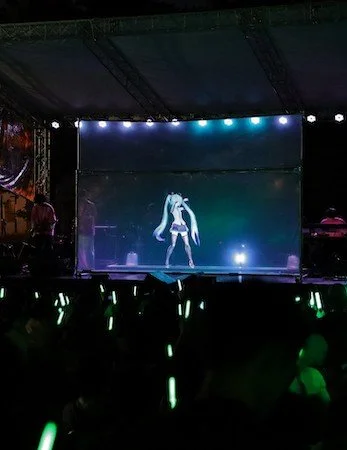
IN A PACKED concert venue, thousands of fans wave glowsticks in perfect synchronisation, their movements choreographed to music pulsing through the space. The atmosphere crackles with anticipation as the crowd awaits their idol. When she appears – a slight figure with distinctive blue-green hair styled in twin tails that cascade almost to the floor – the roar is deafening.
But this isn’t your typical pop concert. The star commanding this devotion isn’t human – she’s Hatsune Miku, a digital creation performing through advanced holographic technology while backed by flesh-and-blood musicians.
What elevates Miku and makes her significant in our cultural landscape is her accessibility. Unlike traditional celebrities, who, even if they want to be accessible to their fans, only have so much time and can’t be perpetually available, Miku is software that anyone can buy and use. It only costs $200 and doesn’t require particularly advanced technical skills. Most of the people who produce Miku music are self-taught. One of the enduringly popular things about the concerts is that everything you see essentially comes from fans – the music, costuming and dance routines are all drawn from the expansive ‘Miku community’, where the lines between amateur and professional are deliberately blurred by everyone involved. You’re as likely to hear a song produced through a record label as you are one that was popularised by YouTube.